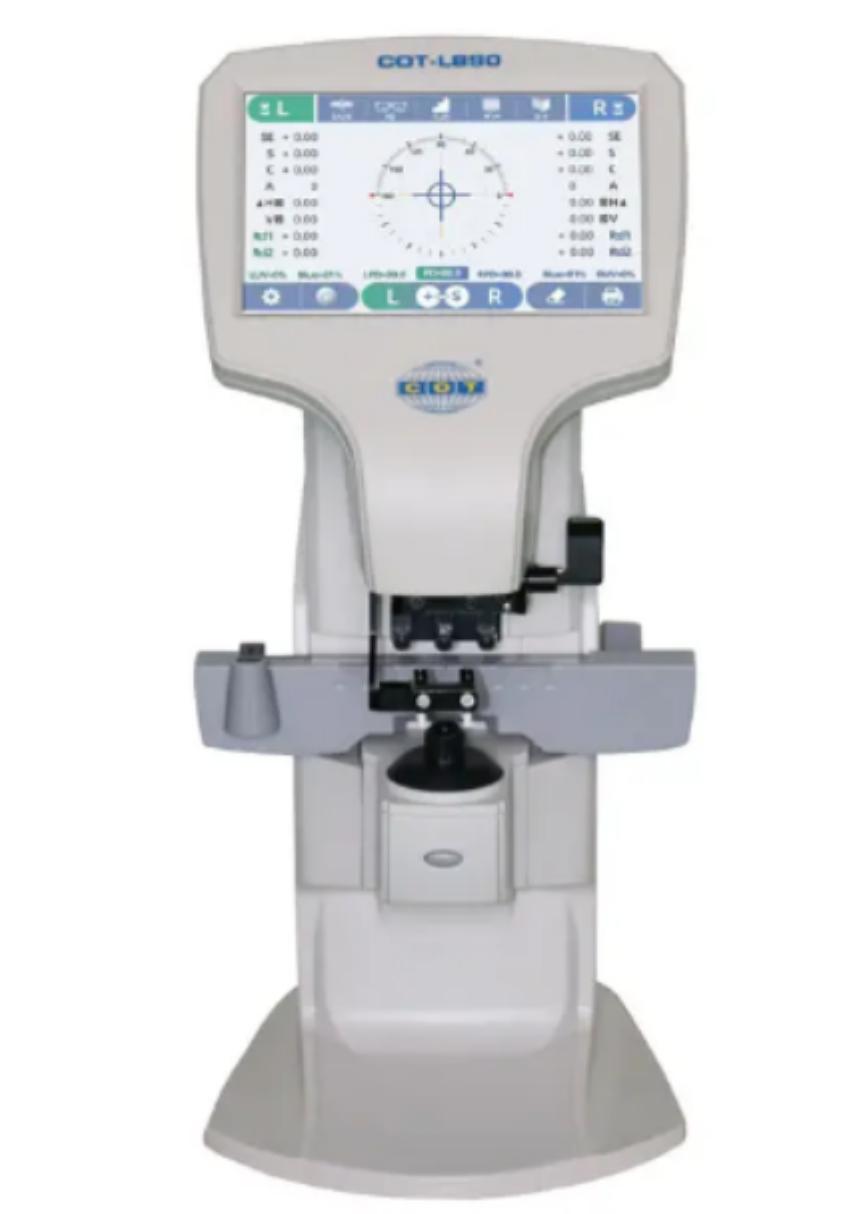
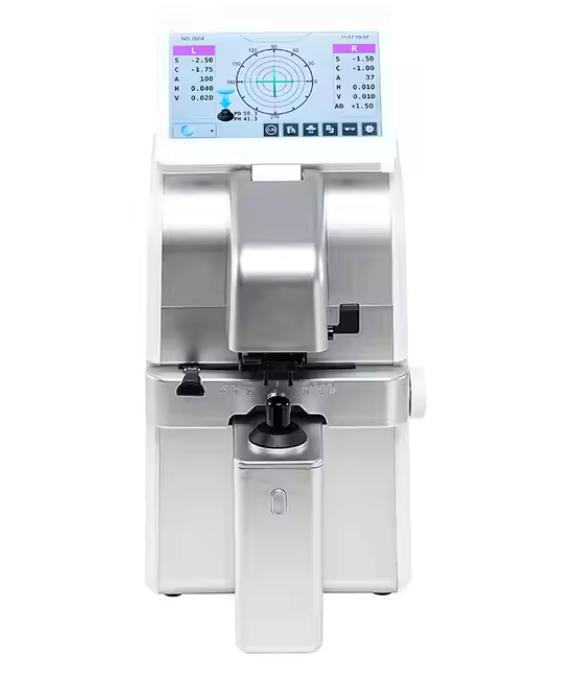
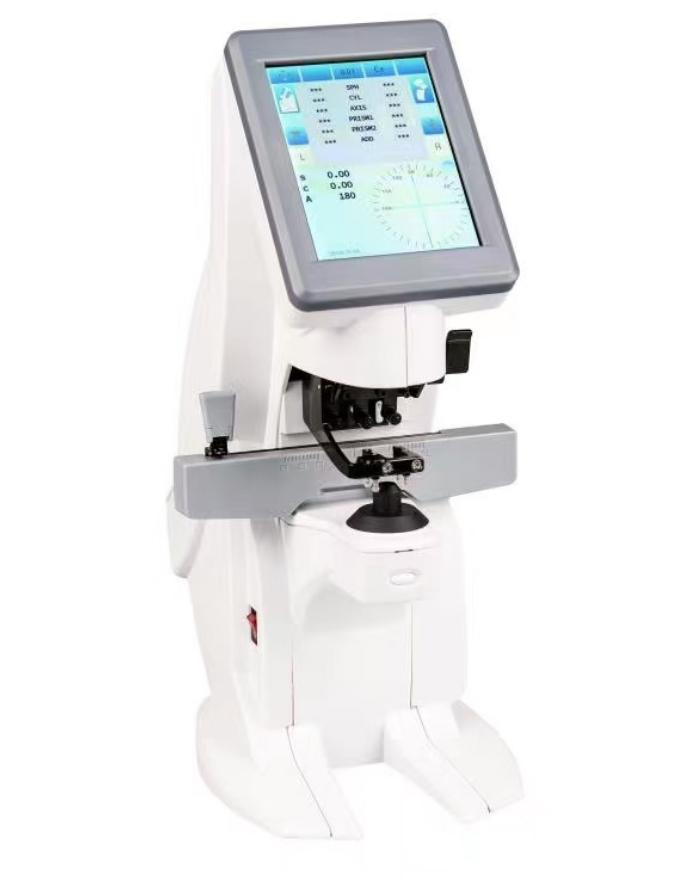
Solid lab lensmeter
Repeatable sphere, cylinder and prism readings speed up dispensing verification. Locating the fitting cross on progressives is refreshingly straightforward.
Dr. Lucia Ferrando, MDVerified buyerMar 28, 2025
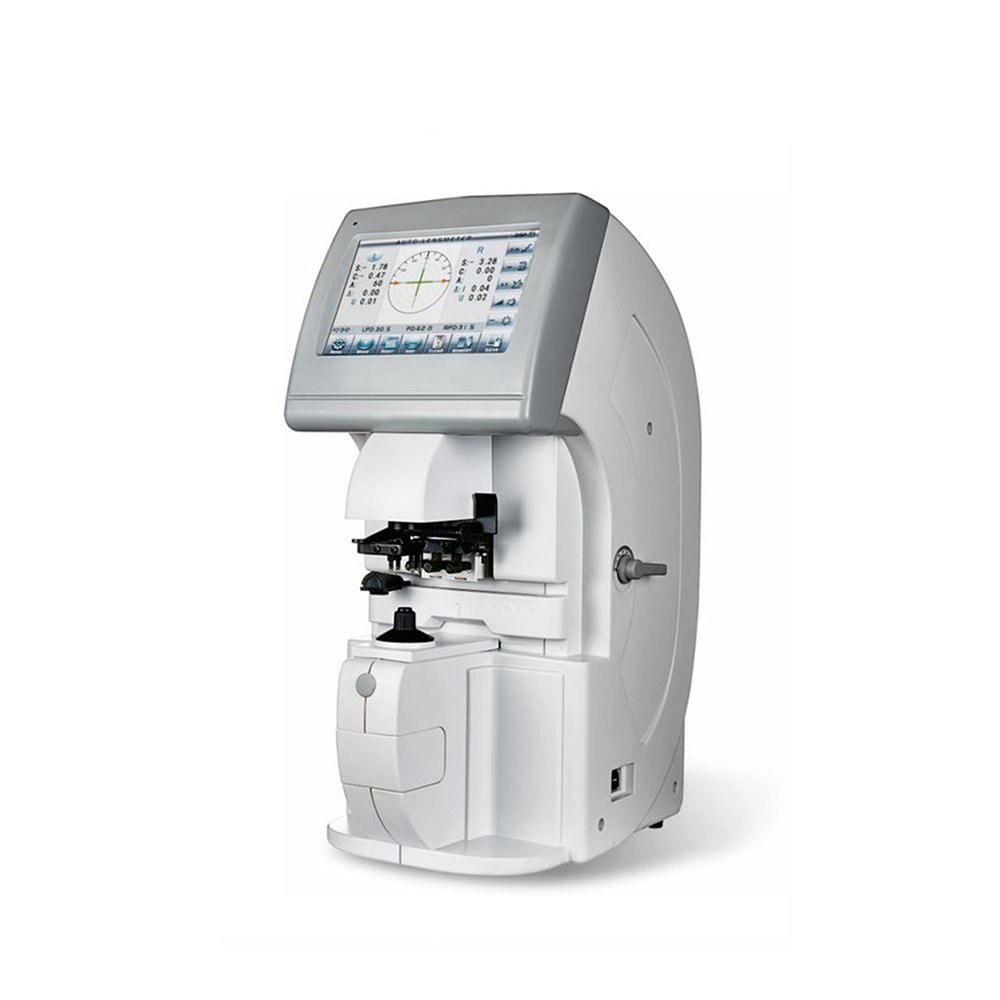
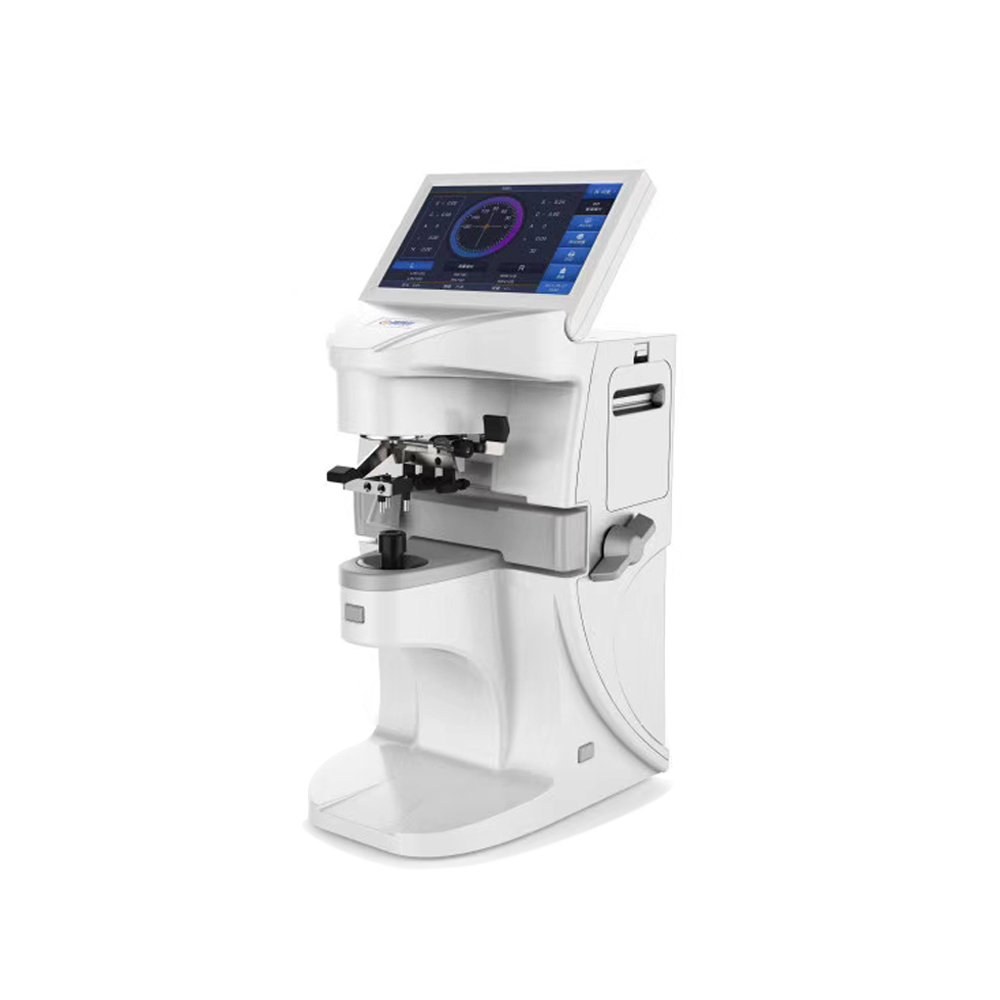
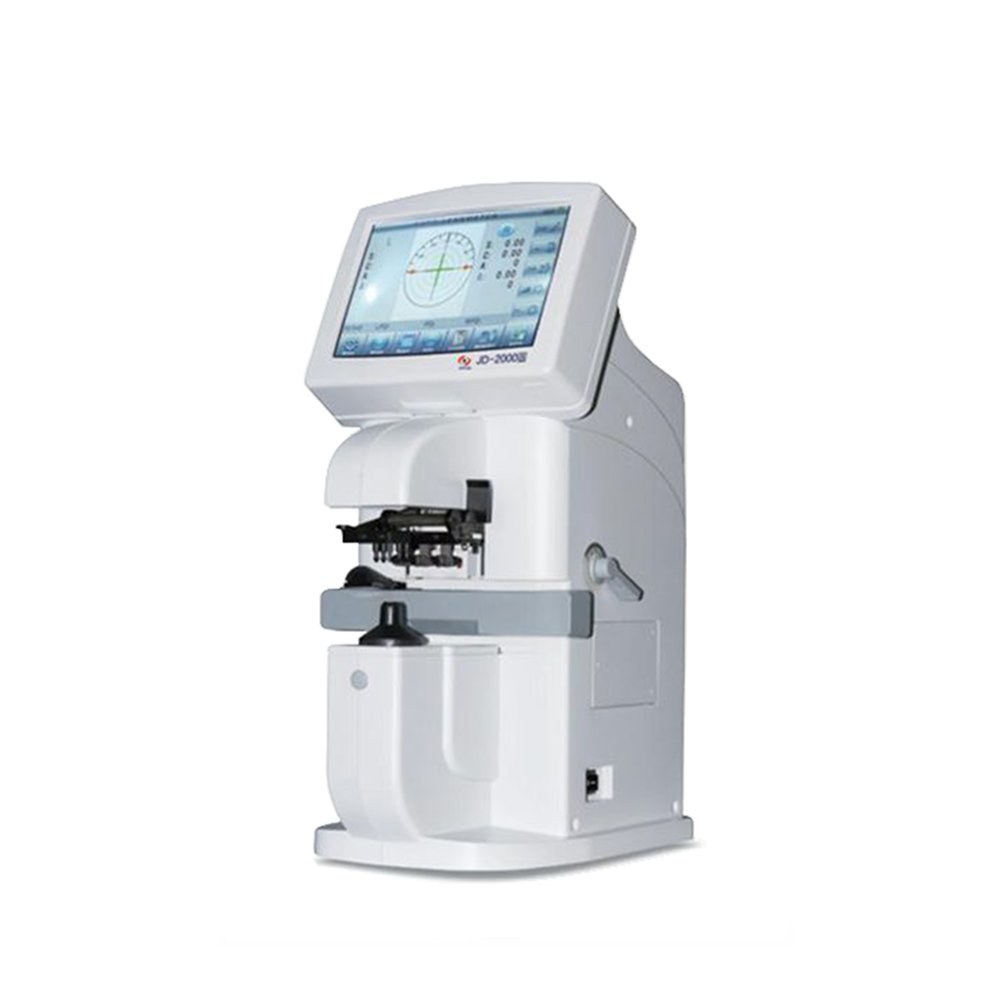
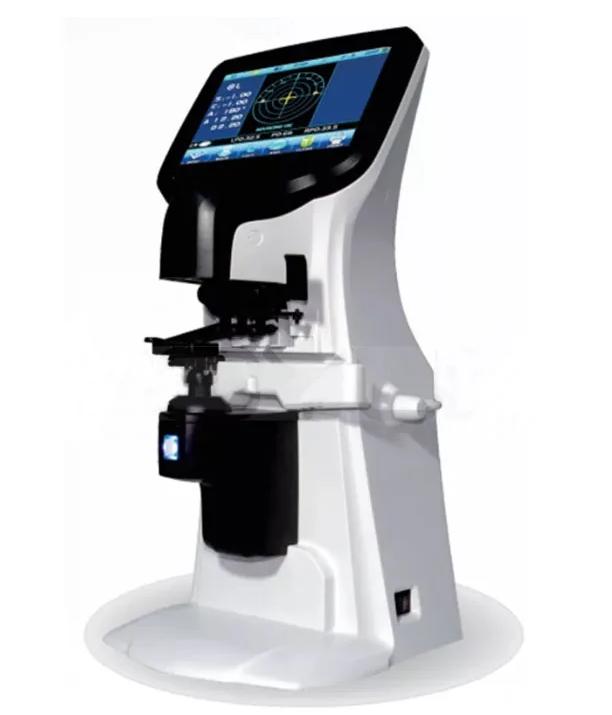
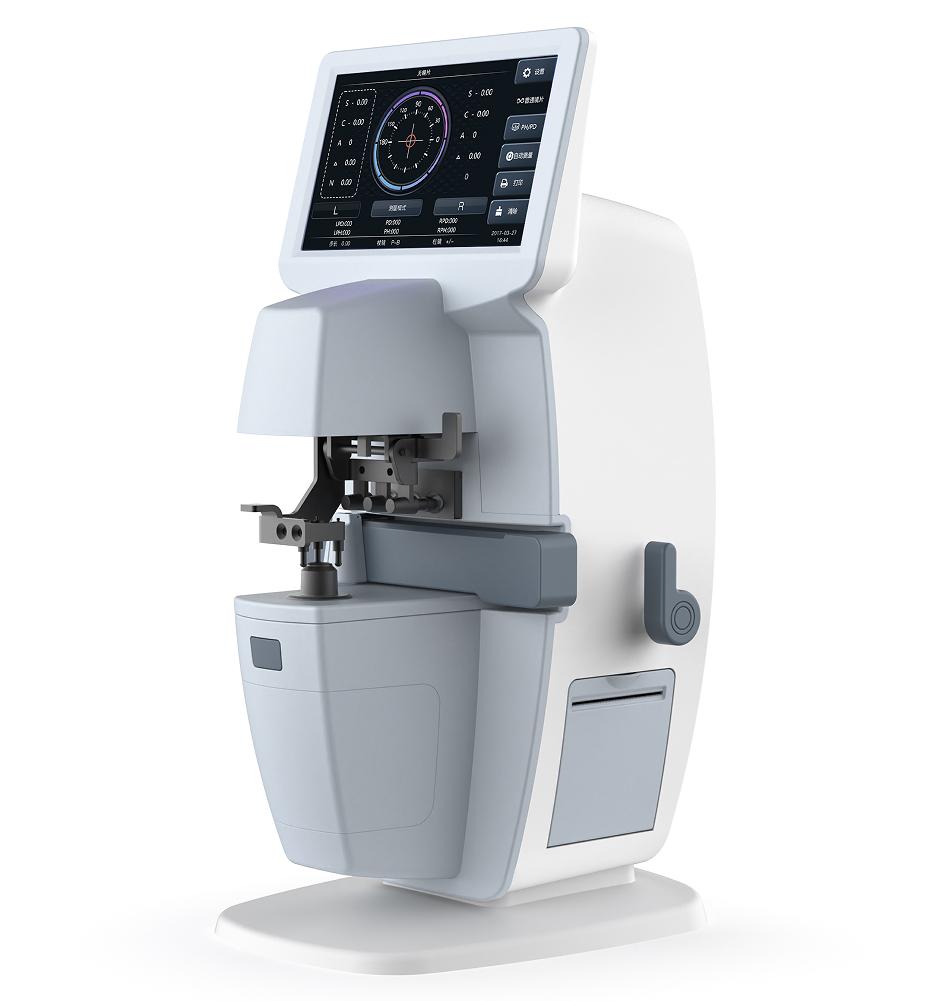
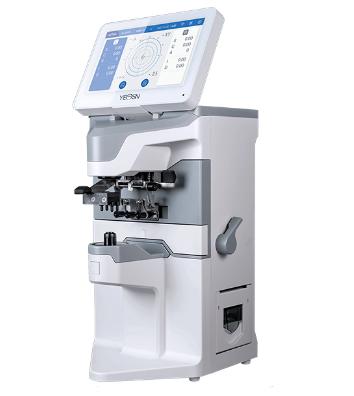
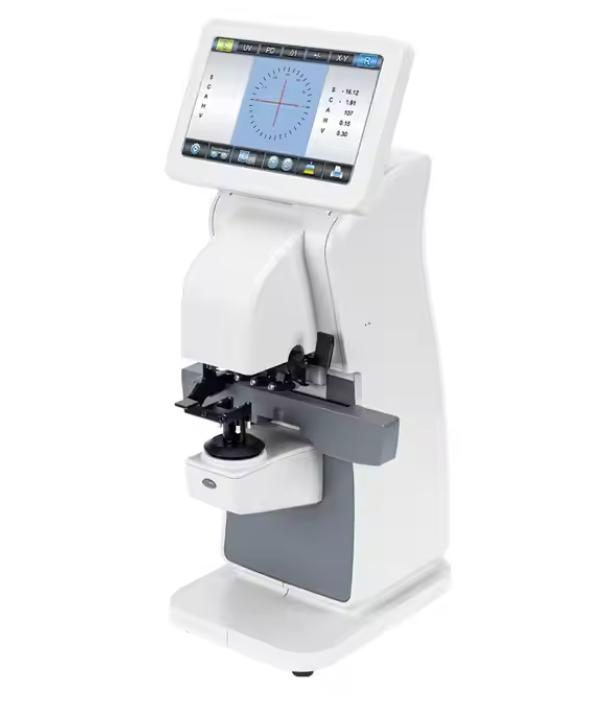
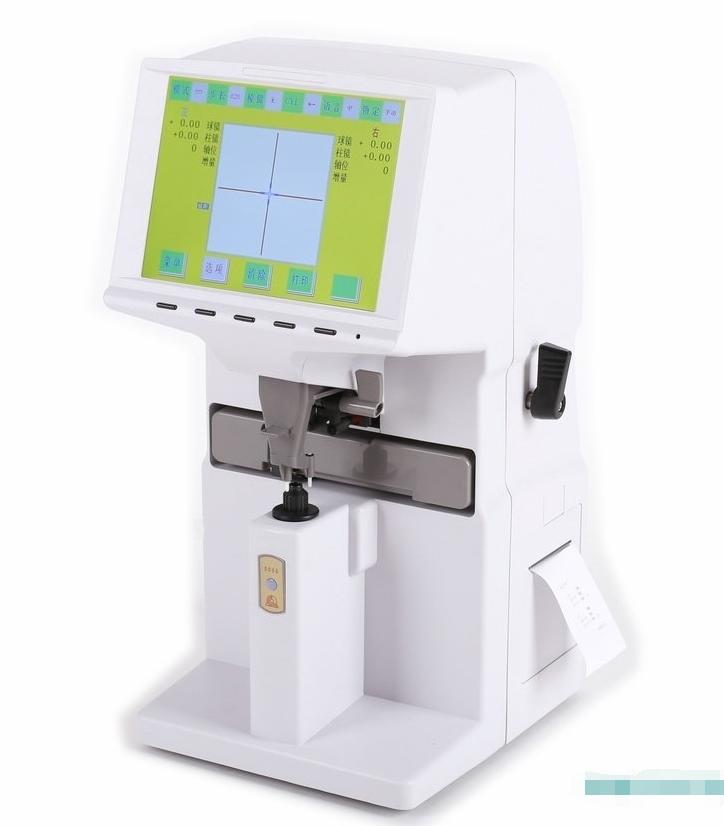
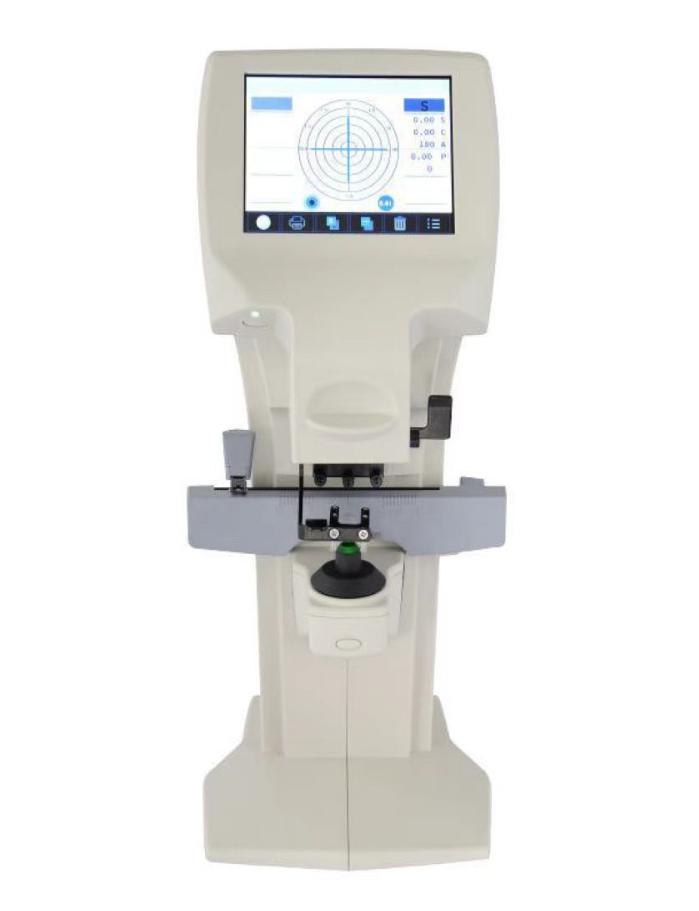
7" LCD touch auto lensmeter with progressive recognition, hi-speed UV and graphical progressive measurement display. Mid-tier of the JD line, optimised for accuracy on bifocal and progressive lenses.
Clinical overview
The JD-2600 sits between the entry-level and the touchscreen flagship. Its graphical progressive-measurement display guides the operator to capture near and far reading points accurately, while the 7" touchscreen and built-in thermal printer keep the dispense workflow paperless.
| Sphere | 0 to ±25 D (0.01 / 0.12 / 0.25 D step) |
|---|---|
| Cylinder | 0 to ±9.99 D (0.01 / 0.12 / 0.25 D step) |
| Axis | 0° to 180° (1° step) |
| ADD | 0 to +9.99 D (0.01 / 0.12 / 0.25 D step) |
| Prism | 0 to 15Δ (0.01 / 0.12 / 0.25Δ step) |
| Cylinder mode | +, +/-, - |
| Prism mode | X-Y, P-B |
| Contact lens | Soft / hard |
| Modes | Single / progressive / auto recognition |
| Lens diameter | Ø20 to 108 mm |
| PD range | 45 to 90 mm (0.5 mm step) |
| Speed | 0.1 s |
| Display | 7" TFT LCD |
| Printer | Thermal |
| Dimensions / weight | 216 × 300 × 456 mm / ~6 kg |
| Power | 100–120 V / 200–110V/220V, 50/60 Hz |
Opticals and dispensing labs that handle progressive Rx daily and want a lensmeter built around the progressive workflow — without paying for the touch-flagship’s extras.
Available on request
The full spec + documentation pack for this device ships ahead of purchase on request. A sales engineer responds within one business day.
Configuration sheet
Sizes and dimensions, material and finish, compatible instruments and screw references, what ships in the set, lead time and warranty — all in one specification sheet, sent within one business day.
Documents & downloads
This device's IFU, CE Declaration of Conformity, ISO 13485 certificate and (where applicable) FDA 510(k) clearance ship with the order. Reach out below for the pack ahead of purchase.
Get in touch
Our clinical sales team will scope quantities, voltage, accessories and regulatory paperwork — usually within one business day.
Repeatable sphere, cylinder and prism readings speed up dispensing verification. Locating the fitting cross on progressives is refreshingly straightforward.
Dr. Lucia Ferrando, MDVerified buyerMar 28, 2025
The auto lensmeter locates progressive addition zones quickly and reports UV transmission and ABBE number clearly, which makes verifying complex prescriptions much faster. Prism and axis readings are consistently accurate.
Dr. Stephanie Colton, MDVerified buyerAug 15, 2024
Reads single-vision and progressive lenses reliably, and the UV transmittance figure is a useful extra when checking finished spectacles. The touchscreen is responsive.
George Hemsley, ODJul 28, 2025
The CCQ-1100 is an automatic lensmeter built around a Hartmann sensor with 165 sampling points and a high-speed dual-core processor. It performs automatic recognition of single-vision, multifocal, and progressive lenses, and includes blue light measurement and UV protection display functions. It is intended for optical labs, dispensing opticians, and clinics that need a daily lensmeter for prescription verification. It is supplied as a desktop unit for the dispensing or finishing bench.
The LM-260 is a desktop auto lensmeter for verifying single-vision, bifocal and progressive lens prescriptions, with sphere, cylinder, axis, prism and addition measurements as part of the standard workflow. Prism measurement on the dispensing bench is helpful for verifying made-to-order glasses with prescribed prism corrections. The desktop format suits optical dispensaries, optometry practices and lens-finishing labs. A solid everyday verification tool for mid-range dispensing setups.
The L-5000B is a desktop auto lensmeter for verifying single-vision, bifocal and progressive lens prescriptions on the dispensing bench. It covers the standard spectacle-lens range optical dispensaries need for everyday quality control and incoming-lens checks. The desktop format and straightforward operation suit busy optical retail counters and lens-finishing labs. A practical core instrument for any optical dispensary.
The HV-100 is an auto lensmeter built around Hartmann wavefront analysis for verifying single-vision, bifocal and progressive lens prescriptions. Wavefront-based reading helps the device handle progressive add zones and complex lens designs that classic green-light lensmeters can find harder to map. Aimed at optical dispensaries, optometry practices and lens-finishing labs that need a reliable verification step. A practical core tool for any modern optical retail or lab workflow.
The L890 is an auto lensmeter built around a Hartmann array sensor with a green LED light source and a 7-inch color touch screen for everyday lens verification. It reports sphere, cylinder, axis, PD and PH, supports colored lenses down to 10% transmittance and reads down to ±0.12 D minimum lens power. Optional PD/UV measurement and a thermal printer let the device grow with the dispensary's workflow. Aimed at optical retail, optometry practices and finishing labs looking for a flexible mid-range lensmeter.
The LM-900 is a desktop auto lensmeter using a Hartmann sensor with 108 measurement points and a 0.1-second reading time, aimed at busy dispensing benches that need quick lens checks. Measurement ranges cover sphere up to ±25 D, cylinder up to ±9.99 D, axis across 0-180 degrees and reading addition up to 9.99 D, with prism up to 15Δ. A 3.5-inch color LCD touch display keeps the workflow simple, and the 3 kg form factor stays out of the way on the bench. This variant ships without a printer and without binocular PD, keeping the unit focused on core verification.
The HV-300 is an auto lensmeter that measures single-vision, bifocal, progressive and contact lens powers in one device, extending the standard spectacle-lens workflow into contact-lens verification. Contact-lens measurement makes it useful for practices that fit and replace soft and rigid lenses alongside spectacle dispensing. The unit is aimed at optical dispensaries, optometry practices and contact-lens fitting rooms. A practical step up from spectacle-only lensmeters for clinics with mixed dispensing workflows.